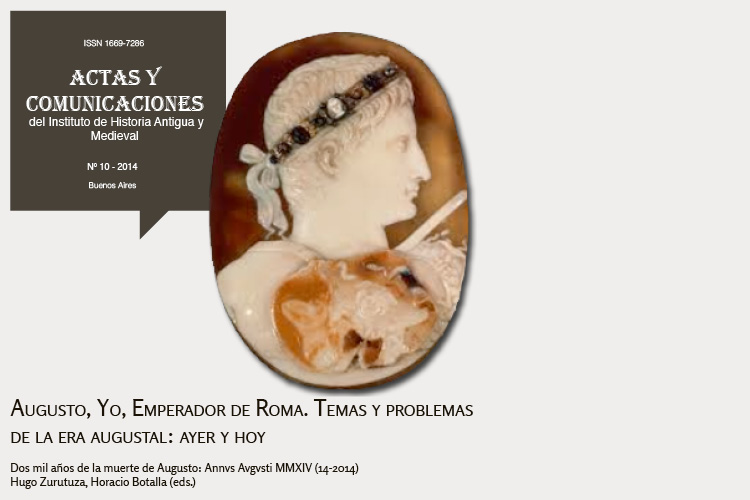
The Augustus political project in the carmen saeculare of Horace. Contemporary and late-antique implications
DOI:
https://doi.org/10.34096/aciham.v10.1068Keywords:
Augustus, Horace, Carmen Saeculare, politics project, LudiAbstract
Octavius, who entered the Roman politics after the assassination of Julius Caesar in March 44 B.C, assumed the task of organizing a state in decline, simulating the permanence of the institutions of the ancient Republic. Building a new political order, the young Octavian transformed the knowledge structures that held the Republican elite, to antiquarian, lawyers, poets and artists give way, through their works, an ambitious cultural program. Among these, the poet Horace, then known for his lyrical production, was adjusted to the Augustan ideology to compose, at the request of the emperor, the Carmen Saeculare, an hymn meant to be sung during the “Games of the Century” (17 B.C.), specially to pray the gods of the Palatine—the protectors of Augustus— so that Rome would enjoy eternal peace, abundance and fertility.